Late July is peak season for a very specific kind of disappointment: you catch your reflection in a store window, glance down at that tattoo you used to love, and think… didn’t this used to be darker? It’s not your imagination. It’s not the tattoo “settling.” It’s the sun, quietly doing what the sun does to literally everything left out in it too long, including the ink sitting under your skin.
Tattoos Fade From the Top Down, Not All at Once
Ink sits in the dermis, the layer just below the surface. UV rays don’t stop at the epidermis and politely leave your tattoo alone. They penetrate down, break apart pigment molecules, and scatter them, which is a fancy way of saying your once-crisp black lines start looking gray and your reds start looking like they’ve been through the wash a few too many times. Reds and yellows tend to go first. Black and dark blue hang on longer, which is part of why traditional bold tattoos age better than pastel watercolor pieces. This isn’t a fresh-ink problem, either — this is a five-year-old, ten-year-old, twenty-year-old tattoo problem. The damage is cumulative, and it happens slowly enough that you don’t notice until one summer you suddenly do.
Why It’s Worse in Summer Specifically
More skin exposed, more hours outside, more sunburn. A sunburned tattoo doesn’t just hurt — the peeling that follows takes pigment with it. You’re essentially sanding down your own artwork one bad beach day at a time. And unlike a sunburn on bare skin, which just turns red and eventually fades back to normal, a burned tattoo can lose color permanently in that spot. There’s no undo button once the pigment is gone.
The Fix Is Boring But It Works
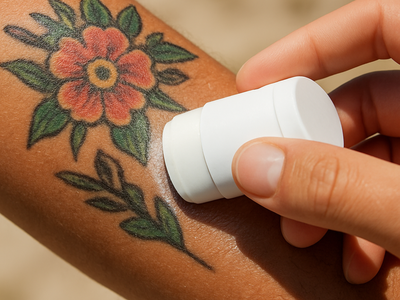
Sunscreen. That’s it, that’s the secret. Specifically, something broad-spectrum, SPF 30 or higher, reapplied every couple of hours if you’re actually outside and not just walking from your car to a coffee shop. The American Academy of Dermatology has decent, non-salesy guidance on how sunscreen actually works if you want the science without the marketing spin. For tattoos specifically, a lot of artists like something formulated to sit on top of the skin without sinking in and dulling color the way some heavier lotions can. A mineral-based stick like the Hawaiian Tropic tattoo sunscreen stick is easy to keep in a bag and swipe on without the greasy mess of a full lotion application, which matters if you’re actually going to remember to reuse it.
What About Clothing and Shade?
Underrated and free. A cotton shirt over a fresh piece or a long-healed sleeve does more than people give it credit for. If you’re going to be out for hours — festival, hike, day at the lake — a lightweight long-sleeve UPF shirt beats reapplying sunscreen every ninety minutes and forgetting anyway. Plenty of options exist that don’t feel like wearing a tarp; something like a UPF 50 sun shirt is thin enough for summer heat but blocks the rays that are actually doing the damage.
Can You Bring Faded Color Back?
Sometimes, sort of. A touch-up session can restore saturation on a tattoo that’s faded from age and sun, and a good artist can often deepen color that’s gone gray or washed out without a full redo. But it’s easier, cheaper, and less painful to prevent the fade than to fix it. Consider a touch-up an option for damage already done, not a reason to skip sunscreen this year.
If you’ve got a piece you’re genuinely attached to — the memorial tattoo, the one from the trip that mattered, the portrait you paid real money for — treat sunscreen the same way you’d treat any other maintenance you don’t want to think about but do anyway, like changing your oil. It’s not glamorous. It’s just the difference between a tattoo that still looks good in ten years and one that looks like a photocopy of a photocopy.