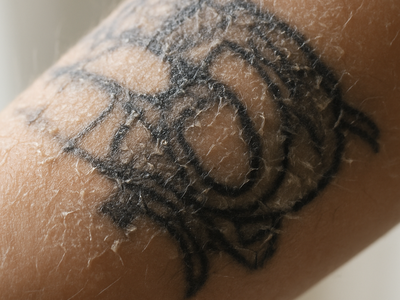
Somewhere between day four and day ten, every fresh tattoo goes through an ugly-duckling phase. The colors look washed out, the linework looks patchy, and little translucent flakes of skin start coming off in the shower like you’re molting. If you’re staring at your arm right now wondering if you ruined a perfectly good tattoo, you didn’t. This is just peeling, and it’s one of the most panic-inducing but totally normal parts of healing.
What’s Actually Happening Under There
A tattoo needle doesn’t just deposit ink in one spot and call it a day. It injures the epidermis (the top layer of skin) and the upper dermis, where the ink actually settles long-term. Your body treats the whole area like a wound, which means it does what wounds do: forms a thin protective layer, then sheds it once the skin underneath has regenerated. That shedding is the peeling you’re seeing. It’s dead skin cells and a little bit of surface ink, not your actual tattoo falling off.
This is also why the tattoo looks cloudy or faded during this stage. You’re seeing the healing skin sitting on top of the ink, not the ink itself. The real color is still down there. Artists sometimes call this the “ugly phase” for a reason, and pretty much every tattoo goes through it, even the ones that end up looking flawless a month later.
How Long It Lasts
For most tattoos, peeling kicks in around day three to five and wraps up by day ten to fourteen. Bigger pieces with heavy shading or blackwork can peel a bit longer since there’s more surface area doing the same job. Fine-line and single-needle tattoos sometimes barely peel at all, which throws people off because they expect flaking and don’t get much of it. Less peeling doesn’t mean it’s healing worse.
What You Should (and Shouldn’t) Do
The instinct to help the process along is strong. Resist it. Picking, scratching, or peeling flakes off manually can pull out ink before it’s properly settled, which is how people end up with patchy spots that need a touch-up later. Let it come off on its own in the shower.
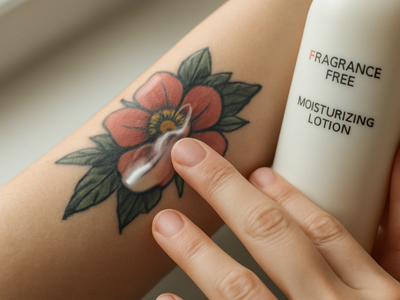
- Keep the area clean and lightly moisturized, but don’t overdo the lotion. A thick layer traps moisture and can actually slow healing or cause tiny breakouts.
- Stick to a fragrance-free, dye-free option. Something like Aquaphor Healing Ointment in the first few days, then switching to a plain unscented lotion once the shine and tightness fade, works for most people without overloading sensitive skin.
- Wear loose clothing over the area so flakes aren’t getting rubbed or pulled off by fabric.
- Skip the pools, hot tubs, and long soaks until the peeling’s done. Chlorine and standing water on partially healed skin is a bad combo.
If you’re the type who needs a barrier to stop yourself from picking, a lot of people have good luck with adhesive tattoo films like Saniderm or a similar second-skin bandage for the first several days. It keeps hands off the area entirely and cuts down on lint and friction, though you’ll still hit a peeling phase once you take it off for good.
When Peeling Is Actually a Problem
Normal peeling doesn’t come with spreading redness, pus, red streaking, or fever. If you’re seeing any of that alongside the flaking, that’s not a healing stage anymore, that’s a possible infection, and it’s worth a call to your artist or a doctor rather than a wait-and-see approach. The Mayo Clinic has a solid rundown of what normal tattoo healing versus infection looks like if you want a second opinion beyond your artist’s Instagram DMs.
For everyone else, the flaky, cloudy, slightly alarming week is just the tattoo’s awkward teenage phase. Give it two weeks, moisturize like a normal human being instead of a lotion enthusiast, and the sharp, saturated version of your tattoo will show up right on schedule.