Every October, somebody in your group chat sends a video of a tattoo that lights up under blacklight and asks “wait, is this real?” Yes, it’s real. No, you probably shouldn’t get one. Let’s talk about why.
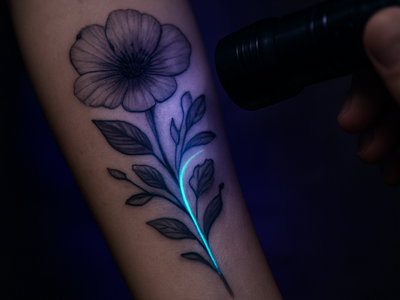
What “UV” or “glow-in-the-dark” tattoo ink actually is
There are two different things people lump together here, and the distinction matters. True UV-reactive ink contains phosphors that react to ultraviolet light, meaning the tattoo is basically invisible in normal daylight and only shows up under a blacklight. Glow-in-the-dark ink, on the other hand, is supposed to absorb light and then glow on its own in a dark room, no blacklight required. In practice, most artists use the term “UV ink” to describe both, and the actual glow-in-the-dark version barely works on skin at all. Skin isn’t a glow-in-the-dark sticker. It doesn’t hold a charge the way plastic or paint does, so if someone’s promising a tattoo that glows like a sci-fi poster with the lights off, be skeptical.
The part nobody wants to hear
UV ink has a rough track record. It’s a less regulated corner of the tattoo ink world, and several brands have been pulled from the market over the years after causing allergic reactions, raised scarring, or ink that never fully healed right. Some formulations use the same phosphorescent or fluorescent compounds found in industrial or novelty products, not things designed to sit under your skin for decades. The FDA has flagged tattoo inks broadly for inconsistent safety data, and UV-specific pigments get even less scrutiny than standard black and color ink. That’s not fearmongering, it’s just the honest state of the industry right now, and you can read more about how the FDA currently handles tattoo ink oversight on their official fact sheet.
On top of the safety question, a lot of people report that UV tattoos look cloudy or scarred-looking in daylight, like a weird raised patch of skin that doesn’t quite read as a tattoo or a scar. Since the ink is formulated to be invisible-ish under normal light, the line work often doesn’t heal as crisp as regular black or color ink, so you can end up with the worst of both: nothing impressive in daylight, something questionable under a blacklight, and a healing process that’s more irritating than a standard piece.
If you still want the effect
Some artists get around the risk by mixing a small amount of UV ink into an otherwise normal black-and-grey or color piece, so the UV element is a hidden detail rather than the whole tattoo. That’s a safer way to dip a toe in, since you’re not relying on UV ink to do all the work and you’re not covering a large area with a less-tested pigment. Ask to see healed photos, not just fresh ones, because UV ink problems tend to show up weeks or months later, not on day one.
Do your research on the artist’s specific ink brand before you agree to anything. A reputable shop should be able to tell you exactly what they’re using and why they trust it. If they shrug or say “it’s just the glow stuff,” that’s your answer.
A cheaper, reversible way to scratch the itch
Honestly, if you just want the blacklight party trick for Halloween, a UV-reactive temporary tattoo gets you the same glow-under-blacklight effect for one night, with zero long-term risk. Pair it with a decent UV flashlight and you’ve got the exact same photo-op without gambling on how your skin handles an under-tested pigment for the next thirty years.
Permanent tattoos are, by definition, a long game. UV ink is still very much in its awkward teenage phase as a product category. Let it mature a little before you let it live on your arm forever.