Every July, tattoo shops in beach towns and backpacker hubs see the same rush: people on vacation, feeling loose and spontaneous, walking in off the street wanting something permanent before their flight home. Sometimes it works out beautifully. Sometimes it becomes the tattoo you explain away for the rest of your life. Here’s how to tell which one you’re about to get.
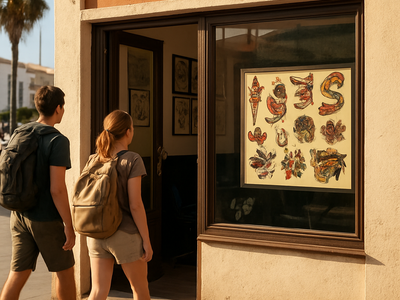
The walk-in shop is not automatically a red flag
There’s a weird snobbery around “tourist tattoos,” like anything done outside your hometown artist’s studio is inherently sketchy. That’s not true. Some of the best shops in the world are in places tourists flock to, precisely because there’s enough foot traffic to support serious talent. The difference between a great vacation tattoo and a regrettable one usually isn’t location. It’s whether you did any homework at all, or just picked the first storefront with flash art in the window and a margarita in your hand.
Give yourself twenty minutes before you commit. Look up the shop online, check for a real portfolio (not just five-star reviews with no photos), and see if the artist has an Instagram with recent, in-progress healed work. If a shop won’t show you anything beyond stock designs on the wall, that’s your answer.
Autoclaves don’t care what country you’re in
Sterilization standards are honestly less about geography and more about the specific business. A dingy-looking shop in a major city can be spotless in practice, and a polished-looking one can be cutting corners you’d never notice. Ask directly whether they use single-use needles and how they sterilize equipment. A legit shop answers this without blinking. One that gets cagey or annoyed is telling you something.
The math problem nobody thinks about: healing while traveling
This is the part people genuinely underestimate. A fresh tattoo needs about two to three weeks of fairly boring, low-stress care, and vacation is the opposite of that. You’re sweating more, sleeping less, maybe sharing hostel bathrooms, definitely tempted to jump in a pool or the ocean before you should. If your trip has five more days of hiking, snorkeling, or lying on sand, think hard about whether day one of a new tattoo is compatible with day two of your itinerary.
Some people solve this by getting tattooed on the last full day of the trip, accepting that they’ll do the bulk of aftercare once they’re home. Others just accept the tattoo will heal a little rougher than ideal because the story matters more than the perfect scab pattern. Both are valid choices. Just make the choice on purpose instead of by accident.
What actually goes wrong
- Language barrier misunderstandings. Aftercare instructions get lost in translation more often than people expect. If English isn’t the shop’s first language and yours isn’t theirs, ask them to write instructions down or text you a summary so you’re not guessing later.
- No way to go back. If a line looks off after a week, you can’t just pop back into a shop three time zones away for a touch-up. Some artists will honor touch-ups for traveling clients on their next visit to that city, but don’t assume it.
- Impulse plus alcohol equals regret math. Vacation brain makes everything sound like a good idea at 11 p.m. A tattoo decided on a Tuesday afternoon, sober, after actually looking at the design, ages a lot better than one decided after your third drink at a rooftop bar.
The actual takeaway
A vacation tattoo isn’t a worse tattoo by default. It’s just a tattoo with fewer safety nets. If you’d walk into a random shop back home without checking anything first, you probably wouldn’t do it. Hold the vacation version of you to the same standard, and you’ll come home with a real souvenir instead of a story that starts with “so, funny thing happened in Lisbon.”