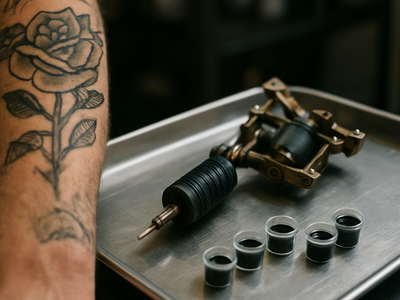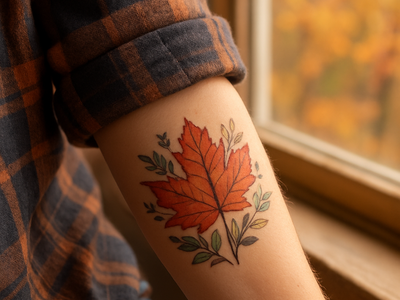
Somewhere between Midjourney’s fourth update and every Instagram artist adding “AI-assisted concepts” to their bio, tattoo shops started fielding a very specific kind of request: “Can you just do this exactly?” And the phone screen gets held up with some genuinely gorgeous piece of AI art. Glowing dragon, hyperrealistic wolf, a sleeve concept that looks like it belongs in a museum. The problem is that almost none of it was made with skin in mind, and that gap causes more disappointment than people expect.
AI Art Is Built for a Screen, Not a Body
Image generators are trained to make something look impressive at a fixed size, on a flat, backlit rectangle. Tattoos live on a curved, moving, aging surface that has to survive decades of sun, friction, and your skin’s own healing process. Those two goals pull in opposite directions. AI tends to generate insane amounts of tiny detail, soft gradients, and lighting effects that look incredible zoomed in on your phone and turn into a smudge the size of a bruise once it’s actually tattooed on a forearm.
Line weight is the biggest offender. A good tattoo relies on a hierarchy of line thickness, some bold, some fine, spaced deliberately so the design doesn’t collapse into a dark blob after a few years. AI art usually doesn’t think in lines at all. It thinks in light and shadow, the way a photograph does, which is why so many AI tattoo concepts look like an oil painting rather than something a machine could actually etch into your arm with a needle.
Symmetry and Anatomy Get Weird Fast
Ask an AI generator for a symmetrical mandala or a portrait, and you’ll often get something that looks correct at a glance but falls apart under scrutiny; a slightly warped eye, mismatched shading on either side of a design, fingers that don’t quite make sense. That’s fine for a piece of digital art you’ll never see up close. It’s a real problem when a tattoo artist has to trace, resize, and adapt that reference onto your actual body, where every inconsistency becomes obvious the moment it’s under skin-level lighting in a shop.
So What’s AI Actually Good For Here?
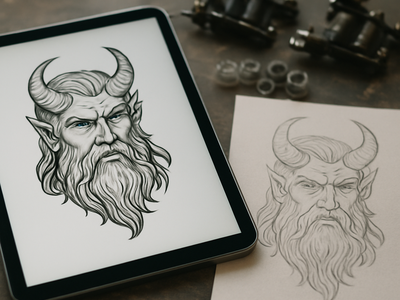
Mood and concept. Bring it in as a vibe board, not a blueprint. Artists are used to working from Pinterest boards, old flash sheets, and reference photos, and AI images can absolutely join that mix as one more piece of inspiration. Show your artist the AI piece and say what you like about it: the color palette, the pose, the general theme. Then let them redraw it in a way that actually holds up as tattoo linework. A good artist will strip an idea down to what matters and rebuild it so it ages instead of degrades.
If you like sketching out your own ideas before a consultation, it’s worth keeping a physical notebook where you paste reference images, jot down placement notes, and sketch rough shapes by hand. Something like a mixed-media sketchbook works well for this because you can tape in printed AI references next to your own notes without them smudging. It also gives your artist something more useful to react to than a phone screen passed across the counter.
Be Upfront With Your Artist
Some artists are completely fine working from AI references. Others have strong feelings about it, partly because a lot of AI art quietly trains on other artists’ work without credit, which is a real ethical sore spot in the tattoo community right now. Mention where the image came from before you’re in the chair, not after. It saves an awkward conversation and gives your artist the context to adapt the design properly instead of trying to copy something that was never meant to survive being tattooed in the first place.
If you want to see how professional tattoo artists talk about translating references into actual tattooable line art, r/tattoo has long-running threads on exactly this, worth a scroll before your next consultation.