You already know the sun fades tattoos. That part’s not news. What nobody tells you is that most of the sunscreen advice floating around is either vague, outdated, or written by someone trying to sell you a $40 tube of “tattoo-specific” lotion that’s basically regular sunscreen with better marketing. So let’s actually talk about what works, what doesn’t, and why your black linework is looking a little gray by August.
Why Tattoos Fade in the Sun Specifically
UV rays break down the pigment particles sitting in your dermis. It’s not that the ink “washes out,” it’s that UV light literally degrades the molecular structure of the pigment over time, scattering and dulling it. Darker, saturated colors like black and deep red hold up longest. Pastels, light grays, and white ink fade fastest and can basically vanish after a few unprotected summers. If you’ve got a watercolor piece or fine-line work with delicate shading, you are the person who needs to care most about this.
Fresh Tattoo vs. Healed Tattoo: Different Rules
This is where people mess up. A fresh tattoo (anything under 2-4 weeks, depending on how it’s healing) should not have sunscreen on it at all. It’s an open wound, technically, and slathering SPF chemicals or physical blockers on broken skin can clog it, irritate it, or trap bacteria under there. The move for a new tattoo is simple: keep it covered with clothing, stay out of direct sun, and don’t even think about sunscreen until it’s fully healed over.
Once it’s healed, though, sunscreen becomes non-negotiable. Not “nice to have.” Non-negotiable. This is the stage everyone forgets about because the tattoo isn’t sore anymore, so it stops feeling urgent.
Mineral vs. Chemical: Does It Matter for Ink?
Kind of, yes. Mineral sunscreens (zinc oxide, titanium dioxide) sit on top of the skin and physically reflect UV rays, and they tend to be gentler on sensitive or newly-healed skin. Chemical sunscreens absorb into the skin and convert UV rays into heat, which works fine too, but some people find they sting on tattooed areas more than untattooed ones, especially with fragrance or alcohol in the formula. If your tattoo is on a spot that sees a lot of friction and sweat, like feet or hands, a mineral formula is usually the more forgiving choice.
The SPF Number Actually Matters Here
SPF 15 blocks about 93% of UVB rays. SPF 30 blocks about 97%. SPF 50 blocks about 98%. The jump from 30 to 50 is smaller than people think, but for tattoos specifically, going with 30 or higher is worth it since you’re trying to prevent cumulative, permanent fading rather than just avoiding a sunburn for one afternoon.
What “Tattoo Sunscreen” Products Are Actually Selling You
Most tattoo-branded sunscreens are just solid, unscented, mineral-leaning sunscreens marketed with a tattoo on the bottle. There’s nothing magic in them. If you already have a broad-spectrum SPF 30+ sunscreen you like and it doesn’t irritate your skin, use that. Save the money for another tattoo instead.
The Habit That Actually Saves Your Tattoo
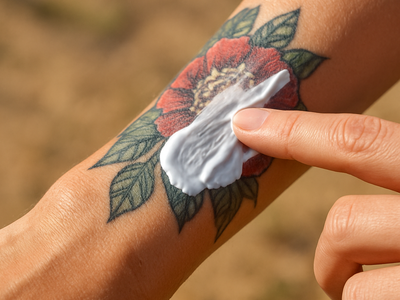
Reapplication is where almost everyone fails, not the product choice. Sunscreen breaks down in a couple hours, faster if you’re sweating or swimming. A tattoo you diligently applied SPF to at 10am and then forgot about during four hours at the lake is basically unprotected by 1pm. Set a phone reminder if you have to. It’s not glamorous advice, but it’s the difference between a tattoo that still looks crisp in five years and one that looks like it’s been left in a window.
And on the days you’re not going to reapply anyway, honestly, just wear a sleeve or sit in the shade. Fabric beats SPF every time, no reapplication required.