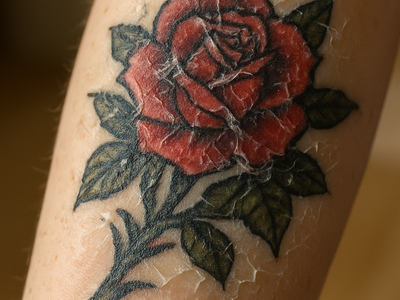
Somewhere around day five to seven, your brand-new tattoo stops looking like art and starts looking like a sunburn that got into a fight with a snake. Flakes everywhere. Dry, papery skin lifting off in little translucent scraps, sometimes taking a hint of color with it. Cue the panic texts to your artist: “is this normal??” Yes. It’s extremely normal. It’s also, weirdly, one of the most satisfying parts of the whole process once you stop being grossed out by it.
What’s actually happening under there
A tattoo needle isn’t gently painting your skin, it’s puncturing it, thousands of times, to deposit ink into the dermis. Your body treats this exactly like it treats any other wound: it seals the surface, then starts shedding the damaged top layer of skin (the epidermis) once the healing underneath is far enough along. That shedding is the peeling. It’s your skin doing quality control, swapping out the traumatized outer layer for fresh new skin while the ink settles into the layer below, where it’s actually going to stay.
The flakes themselves are usually thin, dry, and a little scaly, almost like dandruff with an attitude. Some peeling clumps carry a bit of pigment with them, which sends people into a spiral, convinced the whole tattoo is falling out. It’s not. That’s surface ink and dead skin, not the tattoo itself. The color living in your dermis is unbothered.
Normal peeling vs. something to actually worry about
Normal peeling looks like dry, flat flakes, usually starting a few days after your appointment and wrapping up within a week or two. The skin underneath looks lighter or slightly matte, not raw or wet. Mild itchiness is part of the package, satisfying but off-limits to scratch.
- Normal: flaky, dry, itchy, tattoo looks a little cloudy or faded underneath the peeling skin (this clears up)
- Not normal: peeling combined with spreading redness, swelling that’s getting worse instead of better, oozing that isn’t the usual first-day plasma, or a fever
If you’re seeing that second list, that’s not “aggressive healing,” that’s a signal to call your artist or a doctor. The CDC’s guidance on tattoo aftercare and infection signs is a solid, non-alarmist resource if you want a second opinion beyond a group chat full of people diagnosing your arm off one blurry photo.
Do not pick. Do not help it along.
The urge to peel a hanging flake yourself is real, almost primal. Resist it completely. Picking can pull out ink that hasn’t fully settled, leaving patchy spots that need a touch-up later, or it can reopen skin that’s still closing, which invites infection. Let it fall off on its own timeline, even the pieces that seem like they’re barely hanging on by a thread. Annoying, yes. Worth the patience, also yes.
Keeping the skin properly moisturized actually speeds this stage along and makes it less itchy. A thin layer of fragrance-free lotion, applied a few times a day, keeps the flakes softer and less prone to catching on clothing or getting picked at out of frustration. Something like Aquaphor in the early days, transitioning to a plain unscented lotion like Lubriderm’s fragrance-free formula once the initial ointment stage passes, does the job without clogging things up.
The payoff
Once the last flake finally lets go, usually somewhere around the two-week mark, what’s underneath is genuinely exciting: brighter, cleaner lines than what you saw peeking through the peeling skin. It still needs a few more weeks to fully settle before it looks like its truest, final self, but the peeling stage is the ugly-duckling middle chapter, not a sign anything went wrong. Annoying to sit through, weirdly gross to watch, completely necessary. Let it do its thing.