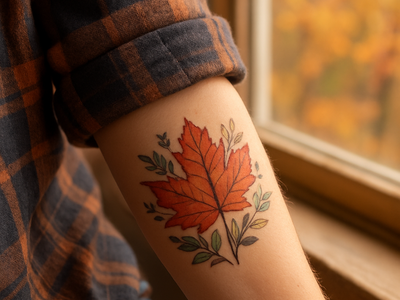
By mid-August your tattoo has survived beach trips, patio hangs, and probably more direct sun than it saw all spring. If it’s looking a little flat or washed out compared to the day you left the shop, that’s not your imagination. Ink fades, and summer sun is the single biggest reason why, faster and more permanently than most people realize until it’s already happened.
UV Light Breaks Down Ink, Not Just Skin
Tattoo pigment sits in your dermis, and UV rays penetrate deep enough to physically degrade those pigment particles over time. It’s the same process that fades a car’s paint job or bleaches a flag left outside too long. The difference is your skin can’t be repainted without another appointment and another few hundred dollars. Black ink holds up reasonably well because carbon-based pigments are pretty stable. Reds, yellows, and light colors are the first to go, which is why an old tattoo with color work often looks muddier or grayer than the black linework around it.
Fresh Tattoos Have It Worse
If you got tattooed this summer and you’ve been letting it catch sun during the healing window, you’re doing real damage. Healing skin is more fragile and the pigment hasn’t fully settled, so UV exposure during those first few weeks can cause more dramatic, permanent fading than sun on an already-healed piece. Most artists tell you to keep it covered and out of direct sun for at least two to four weeks, and that’s not just about avoiding a sunburn on tender skin. It’s about protecting the ink itself while it’s still vulnerable.
Sunscreen Is Not Optional, It’s Maintenance
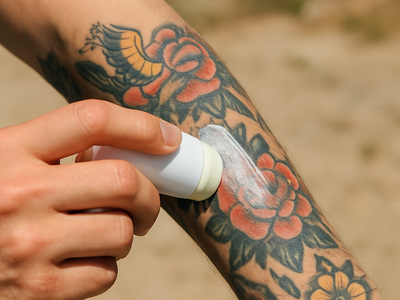
Once a tattoo is fully healed, the fix is boring but effective: sunscreen, every time it’s exposed, reapplied like you mean it. Look for something SPF 30 or higher, water-resistant if you’re going to be sweating or swimming, and reapplied every couple hours if you’re outside all day. A lot of people like a stick formula for tattoos on arms or legs because it’s less messy to reapply over ink than rubbing in lotion. The American Academy of Dermatology has a solid breakdown of what SPF numbers actually mean if you want the science instead of marketing copy.
If you don’t already have something built for repeat use, a mineral stick sunscreen like the Sun Bum Mineral SPF 50 stick is easy to toss in a bag and swipe over a tattoo without the sticky mess of spray or lotion. Doesn’t matter if it’s marketed specifically for tattoos or not, honestly. SPF is SPF. The tattoo-specific products are mostly the same formula with better branding.
Clothing Beats Sunscreen, Every Time
If you’ve got a piece you actually care about, like a big back piece or a color-heavy sleeve, the most reliable protection isn’t sunscreen at all. It’s just not exposing it. A lightweight long sleeve or a rash guard on the beach does more than any SPF number, because it blocks the light entirely instead of absorbing or reflecting a percentage of it. Sunscreen is the backup plan for the parts you can’t cover, not the whole strategy.
What To Do If It’s Already Faded
Faded color can often be revived with a touch-up, and this is a completely normal, expected part of owning tattoos long-term, not a sign you got ripped off or picked a bad artist. Bring reference photos of what the piece looked like when it was fresh if you have them. Most artists have seen a hundred sun-faded tattoos and can tell you honestly whether it needs a light color boost or a more involved rework.
Basically: the tattoo you got in June isn’t gone, but it’s not going to protect itself. A few seconds of SPF before you walk out the door is a lot cheaper than the touch-up appointment you’ll eventually book instead.