It’s the last week of July, which means somewhere right now a person with a tattoo that’s four days old is standing at the edge of a pool having an internal crisis. Do you jump in? Do you sit this one out and watch everyone else have fun? The answer isn’t as dramatic as tattoo forums make it sound, but it’s also not a free pass to cannonball into the deep end.
The short version
Fresh tattoos and standing water are not friends. Not because water itself is evil, but because a new tattoo is technically an open wound for the first two to three weeks, even after it stops looking like one. Submerging it in a pool, ocean, lake, hot tub, or even a long bath means soaking that wound in a soup of chlorine, bacteria, salt, or whatever else is floating around in there. That’s a real infection risk, and it can also pull moisture and pigment out of skin that’s still trying to figure out how to heal itself.
Showers are fine. A quick rinse is fine. It’s the soaking, prolonged submersion part that’s the problem.
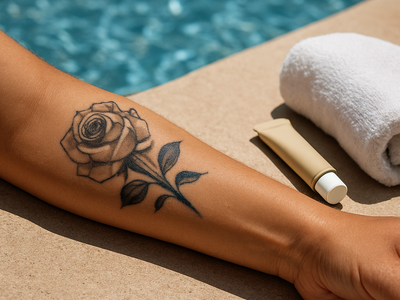
Chlorine specifically
Pools get a bad reputation, but chlorine’s main crime against tattoos is dryness. It strips oils out of skin aggressively, which on a healing tattoo means more cracking, more flaking, and more chances for scabs to pull out ink before they’re ready to fall off naturally. That’s how you end up with those annoying faded patches a few weeks later. It’s not usually infection from a well-maintained pool that’s the biggest threat, it’s the drying-out effect wrecking the healing process.
Salt water is its own situation
Ocean water gets treated like a miracle cure for everything from cuts to sunburn, and there’s some truth to salt water having mild antiseptic properties. But a fresh tattoo isn’t a scraped knee. The salt concentration plus whatever bacteria, sand, and general ocean debris is swimming around with you can absolutely cause irritation or infection on broken skin. Add in the fact that beach days come with sun exposure, and you’ve got a combo that’s rough on new ink from multiple angles at once, not just the water.
Lakes and hot tubs, worst of the bunch
If pools are risky and oceans are a maybe, lakes and hot tubs are the ones to actually avoid. Lake water is standing, often warm, and full of bacteria and algae that pools and oceans don’t really have to deal with. Hot tubs are worse, warm water is a breeding ground, and most people are not maintaining their hot tub chemistry the way a public pool has to be by law. Both are a bad match for skin that’s still an open door for infection.
So when is it actually okay
Most artists will tell you to wait until the tattoo is fully healed on the surface, meaning no more scabbing, peeling, or shine, which is usually somewhere between two and four weeks depending on size and placement. If you want a real answer for your specific piece, ask the artist who did it, not a stranger on Reddit with a completely different skin type and aftercare routine. The American Academy of Dermatology has solid general guidance on wound care that applies here too, even though it’s not tattoo-specific.
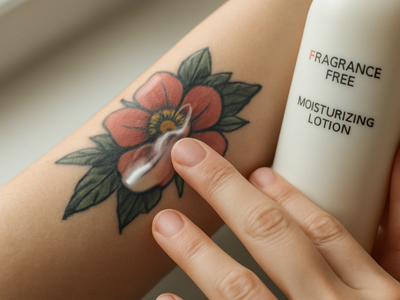
If you’ve got a trip planned before that window closes, a waterproof tattoo cover can buy you some peace of mind for short dips, though it’s not a substitute for just waiting when you can. Something like a waterproof adhesive tattoo cover is worth keeping in a beach bag for exactly this situation, and a gentle, fragrance-free healing balm like an unscented aftercare balm helps once you’re back to dry land and reapplying moisture.
None of this means you have to skip summer. It just means the new tattoo gets to sit this one out while you get in the water, and honestly, that’s a fair trade for ink you’re going to be looking at for the next fifty years.