You found the artist, you loved the flash, you booked the date. Then the shop tells you they need $100 upfront, non-refundable, before they’ll even pencil you into the book. Cue the mild panic spiral: is this normal? Is this a scam? Are you about to get ghosted by someone who just took your money and ran?
Short answer: deposits are standard practice, and there’s a decent reason behind them that has nothing to do with squeezing you for cash. Longer answer, keep reading.
Why shops ask for money before the work happens
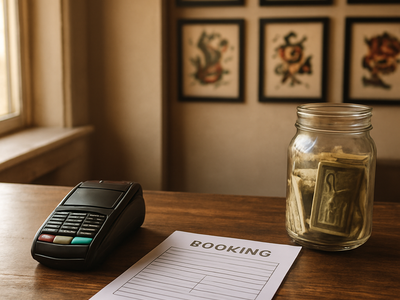
Tattoo artists get burned by no-shows constantly. Someone books a three-hour slot, the artist blocks out their whole afternoon, turns away other clients for that window, and then the person just doesn’t show. No call, no text, nothing. Multiply that by a few times a month and you understand why every reputable shop protects their schedule with a deposit.
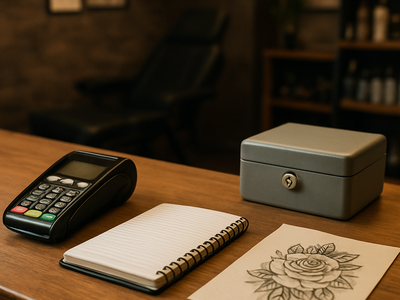
The deposit isn’t really a separate fee. It’s usually applied toward the final cost of the tattoo. So if your piece runs $400 and you put down a $100 deposit, you show up on tattoo day owing $300. It’s less \”extra charge\” and more \”paying a portion early to prove you’re serious.\”
Why it’s almost always non-refundable
This is the part that trips people up, especially first-timers. You cancel, and the shop keeps the money anyway. That feels harsh until you consider it from the artist’s side: they turned down other bookings, prepped a design, maybe already stenciled or sketched something custom. Their time already got spent whether you showed up or not.
Most shops will let you reschedule once, sometimes twice, and still apply the deposit to the new date, as long as you give reasonable notice. It’s a same-day cancellation or a repeated no-show pattern that usually forfeits it for good. Read the shop’s policy before you pay anything so there’s no surprise later.
What a fair deposit policy looks like
- A clear amount, usually somewhere between $50 and $150 depending on the size of the piece and the artist’s rate
- A written or texted confirmation of the amount and what it covers
- A reasonable rescheduling window, often 24 to 48 hours notice
- The deposit clearly applied to your final total, not tacked on as an extra cost
If a shop wants a huge deposit relative to the total tattoo cost, won’t put anything in writing, or gets cagey when you ask basic questions about their policy, that’s worth noticing. It doesn’t automatically mean they’re shady, but it’s a flag to ask more questions before you hand over a card number.
What if you paid and something feels off
If you genuinely think a shop took a deposit in bad faith, most card issuers have a dispute process for exactly this kind of situation. The Consumer Financial Protection Bureau has a straightforward rundown of how billing disputes work if it ever comes to that. It rarely gets that far, though. Most shops are just trying to run a small business without getting burned by flaky clients, same as you’d want some protection if you were the one blocking out your Saturday for a stranger.
Prepping for the appointment you already paid for
Once the deposit’s down and the date’s locked, use the lead time well. Stay out of the sun on the area getting worked on, keep your skin moisturized, and eat a real meal before you sit down in the chair, low blood sugar plus hours in a tattoo chair is a rough combo. A lot of people also like having a small aftercare kit ready before the appointment instead of scrambling after, something like an unscented, tattoo-safe lotion and a pack of non-stick wound pads so you’re not standing in a drugstore aisle with your arm freshly wrapped in plastic wrap.
The deposit stings a little in the moment, sure. But think of it less like a fee and more like a handshake, both sides agreeing to actually show up. That’s a pretty fair trade for guaranteeing your spot with someone whose calendar is probably booked out for months anyway.