Somewhere around week six, after the peeling and the itching and the weird shiny stage, you look at your new tattoo under good light and think: wait, is that patch supposed to look like that? Maybe there’s a spot where the black looks grey. Maybe a line has a gap in it like the needle sneezed. This is the moment everyone Googles “tattoo touch up” at 11 p.m., and the answer is more nuanced than most shops let on.
What a touch-up actually is
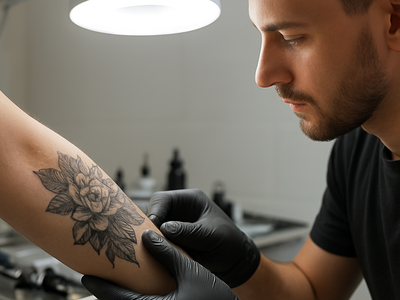
A touch-up is a small correction session, usually done after the tattoo has fully healed (think 6 to 8 weeks minimum, sometimes longer for larger pieces). It’s not a redo. It’s not the artist fixing their own mistakes from scratch. It’s a targeted pass over spots where ink didn’t take evenly, where healing pulled color out, or where a fine line faded thinner than it should be. Skin is not a static canvas — it heals unpredictably, and even a technically perfect tattoo can come out of healing with a few soft spots.
When it should be free
Most reputable studios offer a free touch-up window, typically somewhere between 30 and 90 days after your session, specifically to cover healing-related fading or patchiness. This is standard enough that you should ask about it during your consultation, not after you notice a problem. If your artist made the piece and normal healing caused some ink loss — not because you skipped aftercare, picked at scabs, or decided a fresh tattoo was a good excuse to spend a week at the beach — that’s on the house nine times out of ten. Good shops build this into their pricing already; you’re not getting a favor, you’re getting what you paid for.
When you’re going to pay
Here’s where people get touchy (pun intended). If you didn’t follow aftercare — sun exposure, chlorine, picking, using the wrong lotion, skipping moisturizer entirely — and the tattoo suffered because of it, most artists will still touch it up, but they’ll charge you. That’s fair. Aftercare is your job, not theirs. Same goes for touch-ups requested six months or two years later. At that point you’re not touching up healing damage, you’re asking for a refresh due to normal fading from sun, aging skin, or just time, and that’s a paid session like any other.
Getting a second opinion or a fix from a different artist than the one who did the original work is also almost always a paid gig, and can be trickier than it sounds — the new artist has to work with someone else’s linework and ink choices, which is a different skill than doing a touch-up on your own piece.
When you’re just being difficult
Not every imperfection is a flaw. Skin texture, the slight softness of fine lines, minor color variation in shading — these are part of what tattoos are, not defects. If you’re bringing in a tattoo that’s fully healed, looks exactly like a normal tattoo looks, and asking for it to look like a fresh printout, that’s not a touch-up request, that’s a new-tattoo request wearing a touch-up costume. Artists can tell the difference, and so can you if you’re being honest with yourself.
How to actually get a good touch-up
- Book it with the original artist whenever possible — they know exactly what they did and why.
- Bring good photos taken in natural light, not just under bathroom fluorescents.
- Show up with the area clean and free of lotion or sunscreen residue.
- Be upfront about your aftercare history. Lying about the beach trip doesn’t help anyone.
If you want to minimize the odds of needing a touch-up in the first place, the boring truth is that consistent, correct aftercare does most of the work. A fragrance-free healing ointment applied on schedule beats almost any amount of artist skill working against neglect. Something like Aquaphor Healing Ointment during the first stage, followed by a plain, unscented lotion once it starts peeling, covers most bases without overcomplicating things.
Fading and patchiness aren’t always a sign something went wrong — skin is genuinely unpredictable, and the American Academy of Dermatology has decent background on how skin healing varies person to person if you want the science behind why your friend’s identical tattoo healed flawless and yours didn’t. Ask about the touch-up policy before you sit down for the original session, not after you’re staring at a soft spot wondering who’s paying for it.