Everyone says “check their portfolio” like that settles it. But scrolling through a grid of pretty photos and actually evaluating whether someone should put a needle in your arm are two very different skills. Most people look at 20 tattoos, decide the vibe is cool, and book. Then they’re surprised when their own piece doesn’t look anything like the ones that sold them.
Fresh Ink Photos Are Basically Filtered Selfies
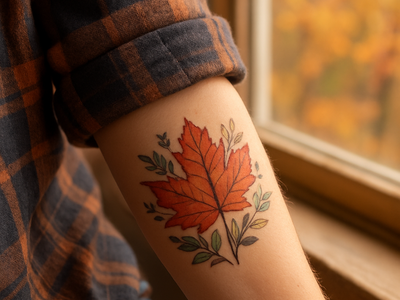
A brand new tattoo, wrapped in glossy skin, shot under studio lighting, looks incredible. Every tattoo looks incredible fresh. The lines are crisp, the color is saturated, the swelling adds a weird glow that reads as depth. What you actually need to see is what that same tattoo looks like six months to a year later, once it’s settled into the skin. If an artist’s whole grid is fresh work with zero healed shots, that’s not automatically a red flag, but it should make you ask directly: do you have healed photos of anything similar? A good artist will have some saved, because they’re proud of how their work ages, not just how it photographs on day one.
Look for the Same Mistake Repeated, Not Just the Same Style Repeated
Consistency in style is good. Consistency in mistakes is a warning sign. Scroll slowly and look for patterns: lines that wobble in the same spot on multiple pieces, shading that always looks patchy in the same way, symmetry that’s always slightly off on things like matching florals or lettering. One inconsistent tattoo could be a bad healing situation on the client’s end. The same flaw showing up across ten different tattoos is the artist, not the client’s skin.
Zoom In, Then Zoom Out
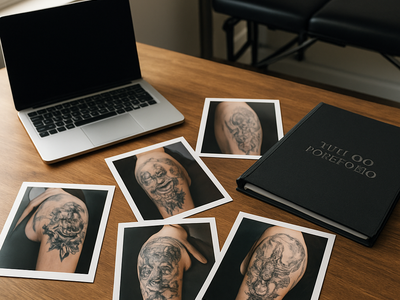
Zoom in to check line quality, saturation, and whether the shading is smooth or scratchy. Then zoom back out and look at the whole piece on the body. A lot of portfolios are shot so close you can’t tell if the tattoo actually fits the arm, the flow of the muscle, or the shape of the area it’s on. Placement matters just as much as the linework itself, and it’s the thing beginners overlook most. If every photo is a tight crop with no context, ask to see the full-body shot before you commit to a placement idea.
Range vs. Specialty Isn’t a Red Flag Either Way
Some artists do one thing extremely well: fine line florals, bold traditional, black-and-grey portraits. Others have a genuinely wide range. Neither is better by default, but you want the artist’s strength to match what you’re asking for. Don’t book the fine-line specialist for a chunky neo-traditional piece just because you liked their other work, and don’t assume the person who’s great at portraits will automatically nail a lettering piece. If you’re not sure what their portfolio is actually specialized in, that’s a fair question to ask outright before a consultation, not something to guess at from the grid.
What to Actually Bring to the Portfolio Review
- Screenshot 3 to 5 pieces you like and can explain why (line weight, color palette, composition)
- Ask specifically for healed photos of similar work
- Check tagged photos or reviews on their studio’s page, not just their curated feed
- Look at how they photograph work on similar skin tones to yours, since ink can read very differently across tones
If you want a broader sense of what different tattoo styles look like when they’ve fully healed and aged, flipping through something like a solid tattoo art reference book before your consultation can actually help you communicate better with the artist, since you’ll have language for what you want instead of just pointing at Pinterest screenshots. For general safety context on what to expect from a legitimate studio, the CDC’s overview on tattoo and piercing safety is worth a skim too, especially if this is your first time booking somewhere new.
A portfolio is basically a highlight reel, same as anyone’s social media. Your job isn’t to be impressed by it. It’s to interrogate it a little, figure out what it’s actually telling you about consistency and healing, and then walk into the consultation with real questions instead of just vibes.