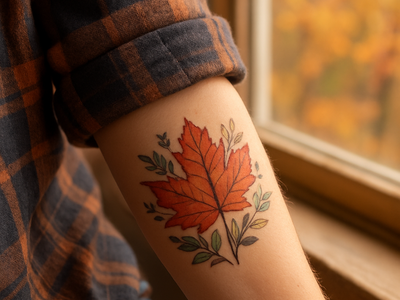
Every few months white ink tattoos make the rounds again, usually because someone’s dainty little flower or freckle-covering dot design goes viral. It looks ethereal in photos: soft, ghostly, barely-there. Then you look closer at the comments and half of them are people saying theirs turned yellow, scarred, or just… disappeared. So let’s talk about what’s actually going on with white ink, because it’s one of those trends that photographs beautifully and behaves terribly.
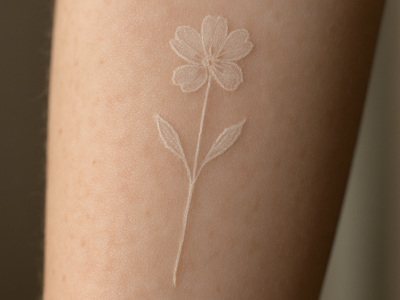
White ink is chemically different from black or colored inks in a way that matters more than most shops advertise. It’s usually titanium dioxide based, the same pigment used in a lot of sunscreens and paints, and it’s thicker and more opaque than other pigments when it’s fresh. The problem is your skin. Skin isn’t white, it’s got undertones, texture, pores, and it’s constantly trying to heal and shed. White pigment sits differently in that environment than darker inks do, and it doesn’t have the same visual weight to fight through scar tissue or uneven healing.
Why it fades, yellows, or just vanishes
Titanium dioxide particles are larger than most black ink particles, which sounds like it should mean it stays put better, but it actually means your immune system treats it more aggressively as a foreign object. Over time that can push pigment out unevenly or bury it under new skin cell layers, which is why so many white tattoos go from crisp white to a dull, yellowish gray within a year or two. Sun exposure speeds this up dramatically, and since white shows discoloration more obviously than black does, even a small amount of yellowing is glaringly visible. If you already have one and you’re noticing this, it’s not an infection, it’s just how the pigment behaves against skin tone and UV exposure over time.
Scarring is the part nobody warns you about
Because white ink needs more passes to look opaque, artists often have to work the area harder than they would with black ink, which increases the odds of raised, textured scarring. On darker skin tones this is especially noticeable, since the scar tissue itself can end up more visible than the tattoo was supposed to be. Dermatologists who study tattoo reactions have noted that white ink is also more likely to trigger delayed allergic or granulomatous reactions than black ink, so if you’re someone with sensitive skin or a history of keloids, this is one of the higher-risk pigment choices, not a low-key safe one, despite how subtle it looks.
Where it actually works
White ink isn’t universally bad, it’s just misapplied a lot. It tends to hold up better as an accent inside a colored piece rather than as a standalone design, because it’s not doing all the visual work alone and any fading blends into the surrounding color instead of standing out starkly. Highlighting on flowers, water, or eyes in a larger tattoo is a much safer use case than an entire minimalist tattoo made of nothing but white lines. If you’re set on a solo white piece anyway, ask your artist directly how many white tattoos they’ve done and ask to see healed photos, not just fresh ones, since fresh white ink always looks better than it will in a year.
If you already have one
Keep it out of direct sun as much as you realistically can, since UV damage is the fastest route to that yellow, muddy look. A physical mineral sunscreen stick is genuinely worth keeping in your bag for exactly this kind of spot-treatment, since you don’t need to slather a whole tube on a two-inch design. Something like this mineral sunscreen stick is easy to toss in a bag and reapply without making a mess. And if yours has already started to shift color, a consult with your original artist is worth it before you assume it needs a cover-up. Sometimes it just needs a light refresh, not a full redo. For more on how pigments behave in skin long-term, the American Academy of Dermatology has a solid breakdown on tattoo safety worth reading before booking anything unconventional.
White ink can be pretty. It’s just not the low-commitment, barely-there option it markets itself as. Go in knowing it ages differently, and you’ll be a lot less disappointed a year from now.