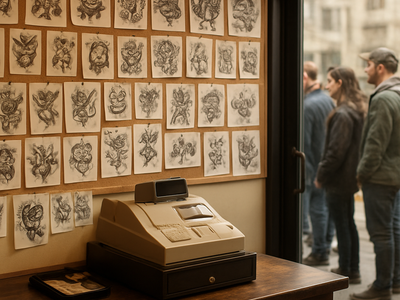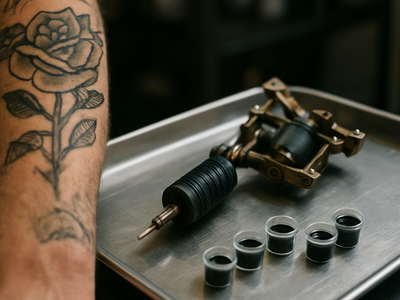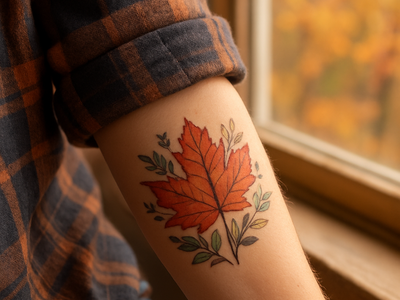
Walk into pretty much any shop and you’ll see them: a wall or binder full of small, ready-to-go designs. Little anchors, roses, skulls, cartoon bees. That’s flash, and if you’ve ever felt weird about picking something “off the rack” instead of getting a custom piece designed just for you, I’m here to tell you to get over it. Flash exists for good reasons, and ignoring it because it feels less personal is leaving money and time on the table.
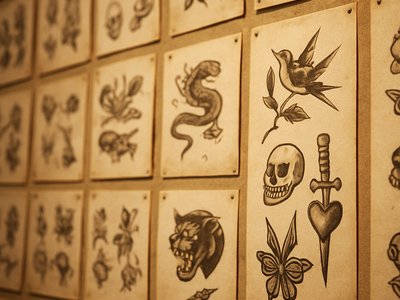
Flash tattoos are pre-drawn designs, usually created by the artist (or sometimes a whole studio’s worth of artists) ahead of time, meant to be tattooed as-is or with very minor tweaks. This isn’t a new trend, either. Flash sheets go back to the early days of American tattooing, when shops needed fast, repeatable designs for sailors and walk-ins who wanted something decent without a two-hour consultation. The tradition is old enough that there are archives dedicated to preserving vintage flash art from artists who shaped the entire look of Western tattooing.
Why Flash Is Usually Cheaper
Custom work means an artist is spending hours sketching, revising, and building something from scratch based on your Pinterest board (which, let’s be honest, is usually a mess of twelve unrelated styles). Flash skips all of that. The design already exists. The artist has probably tattooed it before, maybe dozens of times, which means they’re fast and confident with it. Speed plus repetition equals lower price. It’s not that your skin is getting a discount version of art, it’s that you’re not paying for the creative development time.
This is also why flash is the backbone of most Friday the 13th specials and flash-day events. Shops price them low, sometimes flat-rate, because the designs are simple, quick, and already finished. If you’ve ever wondered why those events feel like a steal compared to a normal appointment, that’s the whole mechanism.
The Actual Tradeoffs
Nobody’s pretending flash is perfect. You’re picking from what exists, not commissioning something built around your idea. Sizing and placement flexibility can be limited since the design is drawn to specific proportions. And if the sheet is popular, yes, someone else probably has the exact same tattoo. For some people that’s a dealbreaker. For others, it’s honestly a relief, because not every tattoo needs to be a deeply personal statement piece. Sometimes you just want a nice little swallow on your forearm and you want it to not cost as much as your car payment.
Where to Actually Find Good Flash
Skip the random Pinterest reposts with no source. Follow individual artists on Instagram instead, most post their flash sheets directly, and booking through them means the design gets retired from their availability list once it’s used (or capped at a certain number of repeats, depending on the artist’s policy). Some studios also sell physical flash books if you like flipping through pages instead of doom-scrolling. If you’re the type who wants to study the artform itself, a print collection like a traditional tattoo flash book is a genuinely good rabbit hole, plenty of working artists still reference these for line weight and composition.
One etiquette note: if you find a design on social media, don’t screenshot it and bring it to a different artist asking them to “just do this one.” Flash is often that artist’s original work, and copying it without permission is a real sore spot in the industry. Book with the person who drew it, or ask your own artist to design something “in the style of” instead. Most are happy to riff on a vibe, they just don’t love being asked to trace someone else’s sheet.
When Flash Makes Sense
Good candidates: first tattoos, spontaneous decisions, filling small gaps in existing work, or anyone who wants something meaningful-adjacent without the six-week planning process. If you’re dead set on a highly specific custom concept, obviously go custom. But don’t assume flash is the lesser option by default. Sometimes the wall of pre-drawn bees is exactly what you didn’t know you wanted.
If you want to see how flash traditions have evolved over the decades, the Smithsonian’s overview of American tattoo history is a solid, non-sketchy place to start.