Every summer, white ink tattoos make the rounds again. Someone posts a crisp little wave or a barely-there moon phase, the comments fill up with “omg need this,” and by August half the tattoo shops in town are fielding requests for something that looks great in a photo taken under studio lighting and terrible everywhere else. So let’s talk about what’s actually going on with white ink, because the gap between the concept and the reality is bigger than most people expect.
The Basic Problem: Pigment vs. Skin
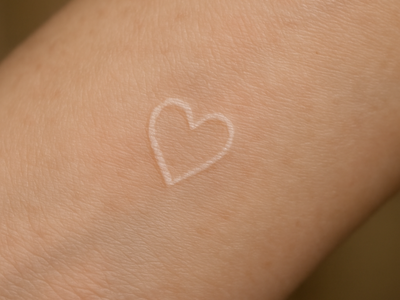
Black ink works because it contrasts hard against skin. White ink is trying to do the opposite job with none of the contrast to help it. Skin isn’t actually white, it’s some shade of pink, beige, olive, or brown, all with undertones and texture. Lay a light pigment into that and your body’s natural color fights it constantly. On very fair, matte skin, a fresh white tattoo can look clean for a while. On literally everyone else, it tends to look more like a faint scar or a weird rash than a design.
What Happens As It Heals
This is where the disappointment usually kicks in. White ink sits at the same depth in the skin as any other color, which means it’s subject to the same healing process, including the raised, slightly irritated look most tattoos have for the first few weeks. Except with black or color ink, that irritation calms down and the design underneath still reads clearly. With white ink, once the swelling and initial darkness from trauma fades, you’re often left with something patchy, grayish, or yellow-toned instead of the bright, clean white from the reference photo. Bodies don’t hold pigment evenly, and lighter pigments show every inconsistency instead of hiding it.
The Scarring Look-Alike Issue
Dermatologists who study tattoo pigment point out that lighter inks are more prone to looking blotchy long-term, partly because they sit closer to how scar tissue reads on skin. That’s the real risk with white ink tattoos: not that they’re dangerous exactly, but that in a year they can be mistaken for an old injury rather than a design. If you’ve ever squinted at someone’s arm wondering if that faint mark is a tattoo or a burn scar, that’s the white ink problem in a nutshell.
Where It Actually Works
White ink isn’t universally bad, it’s just situational. It tends to hold up best:
- As a subtle highlight inside a larger black or color tattoo, not as the whole design
- On very fair, cool-toned skin with minimal natural pigment
- On small, simple shapes rather than fine detail, since white ink blurs and spreads more than black
- When you go in expecting it to fade and look soft rather than crisp forever
If you’re set on the aesthetic, ask your artist to see healed photos of their white ink work specifically, not just fresh shots. Fresh white ink always looks better than it will in six months, so healed examples are the only honest preview you’re going to get.
Protect What You’ve Got
If you do go through with it, sun protection matters more here than with any other ink color. UV exposure breaks down pigment and yellows light inks faster than dark ones, so a tattoo that already reads faint can disappear or discolor within a couple of summers. Keeping something like a mineral SPF stick made for sensitive skin in your bag isn’t overkill, it’s basically maintenance. For more on how sun exposure specifically wrecks tattoo pigment over time, the American Academy of Dermatology’s tattoo care guide is a solid, non-salesy resource.
The Honest Bottom Line
White ink tattoos photograph better than they age. That’s the whole story in one sentence. If you love the look, use it as an accent, pick an artist who’s shown you their healed work, and go in knowing “crisp white” is a fresh-tattoo phase, not a permanent state. Anyone telling you otherwise is selling you the Instagram version, not the year-three version.