You did everything right. You babied that tattoo for the first month, resisted the urge to scratch during the peeling stage, kept it out of the pool. Then, weeks or even months later, out of nowhere, it starts itching like it’s brand new again. If that sounds familiar, you’re not imagining things, and you’re also probably not dealing with anything scary. But it’s worth knowing what’s actually going on under there.
Healed skin isn’t “done” skin
A tattoo looks finished on the surface long before the skin underneath has fully settled. The outer layers heal in a few weeks, sure, but the deeper dermis, where the ink actually lives, keeps remodeling for months. That process involves collagen rebuilding itself around the pigment particles, and remodeling tissue can be itchy tissue. Nobody warns you about this part because it’s not dramatic enough to make the aftercare pamphlet, but it’s incredibly common.
The usual suspects behind late-onset itching
A few things tend to be the real culprits, and most of them have nothing to do with your artist’s technique:
- Dry skin. Tattooed skin loses moisture faster than untouched skin for a while after the procedure. If you’ve eased off the lotion because the tattoo “looks healed,” that dryness catches up with you.
- Sun exposure. Even a little unprotected sun can irritate healing pigment and trigger itchiness days later, not just an immediate sunburn reaction.
- Friction and sweat. Late summer humidity, tight waistbands, bra straps, backpack straps for the back-to-school crowd — anything rubbing against a tattoo daily can reawaken irritation long after the initial healing window closed.
- A delayed reaction to a specific ink color. Red ink in particular has a reputation for causing itchy, raised reactions that show up weeks after everything else looks calm. Some people react to certain pigments the way others react to nickel in jewelry.
When it’s normal vs. when it’s not
Mild, generalized itching that responds to moisturizer and doesn’t come with swelling, texture changes, or spreading redness is almost always just skin being skin. What should get your attention is itching localized to one specific color, itching paired with raised or bumpy texture only in that area, or itching that’s getting worse instead of better over a couple weeks. That pattern points toward an ink allergy, which can technically show up months or even years after the tattoo, not just in the first few weeks. The American Academy of Dermatology has a good rundown on what counts as a normal healing hiccup versus something a dermatologist should actually look at.
What actually helps
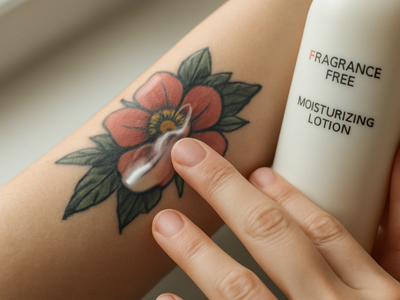
Keep moisturizing well past the point where you think you need to. A fragrance-free lotion is still your best friend here, not just during the obvious healing phase. Something like Eucerin Advanced Repair Cream works well because it’s heavy enough to actually address dryness without being greasy or scented. Sunscreen matters too, even on days you’re not planning to be outside for long, because tattoos are more UV-sensitive than people expect for a solid year after getting them. If you’re dealing with backpack or waistband friction on a newer piece, a breathable cover like a clear adhesive tattoo protector can buy you some relief during the day without smothering the skin.
Mostly, though, this is one of those tattoo quirks nobody puts on the consent form. Your skin is still working something out. Give it lotion, give it time, and resist the urge to scratch it like it owes you money.