Summer and fresh tattoos have a timing problem. You get inked in June, and by the time healing rolls around, every group chat is planning a lake trip or a pool day, and you’re standing there like a lifeguard nobody asked for, watching everyone else jump in.
Here’s the blunt version: nothing about submerging a healing tattoo in a body of water shared by other humans (or algae, or fish) is good for it. But since “just don’t” isn’t realistic advice for an entire season, let’s actually rank your options so you know what kind of risk you’re taking.
The general rule first
Most artists say give it two to four weeks before any real swimming, and that’s assuming your tattoo is fully closed over, not just scabbed and dry-looking. Peeling skin and open pores are basically a welcome mat for bacteria. Soaking that in literally anything is asking for trouble, so treat these rankings as “if you must” rather than “go ahead.”
Chlorinated pools: annoying, but survivable
Pools rank as the least bad option, which isn’t the same as good. Chlorine is a disinfectant, so it’s not going to give you the same infection risk as untreated water. What it will do is dry out and irritate healing skin, and it can fade fresh ink faster than it should because it’s stripping moisture right along with anything else on the surface. If you swim too early, you’ll notice the tattoo looking dull or slightly scabby again afterward, like it’s mad at you. Because it is.
The ocean: complicated
Saltwater gets a weird reputation as “healing,” and sure, saline solution is a real thing tattoo artists use for cleaning. But ocean water isn’t sterile saline. It’s full of bacteria, microplastics, whatever a seagull left behind, and salt concentration that can sting a fresh tattoo in a way that tells you very clearly it’s unhappy. If your tattoo is more than a few weeks old and fully healed, the ocean is honestly fine and a lot of people report their tattoos looking great after beach trips. The risk is almost entirely about timing, not the water itself.
Lakes and rivers: just don’t
This is the one to actually be strict about. Lakes and rivers are standing or slow-moving freshwater, often warm, often with runoff, algae, bird waste, and bacteria levels that fluctuate depending on rain and heat. There’s no chlorine doing cleanup duty and no salt content keeping things in check. A healing tattoo in lake water is one of the more common ways people end up with an infection that requires an actual doctor visit instead of just extra Aquaphor. If you’ve got a lake trip during healing season, this is the one to sit out or seriously wrap and protect if you’re getting in at all.
What actually protects you if you can’t avoid water
- Wait it out if you possibly can. Two weeks minimum, longer for larger or more detailed pieces.
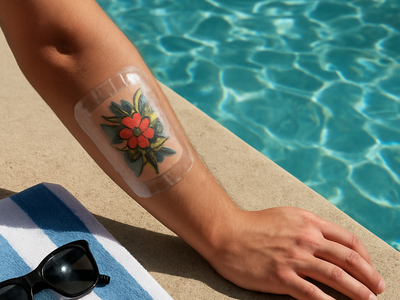
- Waterproof bandages exist for a reason. They’re not invincible, but a few hours of protection is better than none.
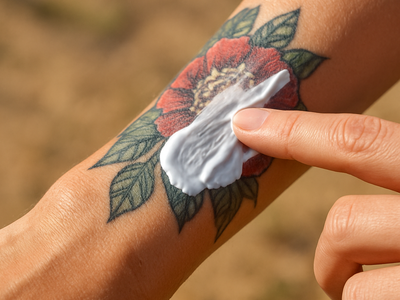
- Rinse with clean water and reapply your usual aftercare immediately after any exposure, don’t just let it air dry with pool or lake water sitting on it.
- Watch for redness that spreads, unusual warmth, or discharge that isn’t normal healing plasma. That’s a “call someone” situation, not a “wait and see” one.
If you’re planning a tattoo specifically because of a summer trip, work backward from the trip date and get it done earlier than you think you need to. Nobody wants to spend their vacation guarding a tattoo like it’s a Fabergé egg, but it beats explaining an infection to an urgent care nurse in a beach town.