You’ve had the tattoo for a few weeks, the peeling’s done, and something looks off. Not infected, not faded exactly — just blurry, like someone smudged the edge of a line with a wet thumb. That’s probably a blowout, and no, it’s not just a “you” problem. It’s one of the most common tattoo complaints nobody warns you about before you sit in the chair.
What’s Actually Happening Under There
A blowout happens when ink gets deposited too deep into the skin, past the dermis where it’s supposed to sit, and spreads out under the surface. Instead of a crisp line, you get this soft, spreading halo of ink that looks smudged even after the tattoo is fully healed. It’s permanent. Healing won’t fix it. Time won’t fix it. Once the ink migrates, it stays migrated.
It’s most common on thin-skinned areas: fingers, wrists, ankles, the inner bicep, anywhere the skin doesn’t have much cushion between the surface and the deeper tissue. That’s exactly why finger tattoos have a reputation for aging badly — there’s just not enough real estate for the needle to work with.
Whose Fault Is It, Really
Mostly, it’s technique. Needle depth, angle, and pressure all matter, and a heavy-handed artist working too fast or pushing too deep is the usual culprit. But skin plays a role too. Some people’s skin is just thinner or more elastic, which makes it easier for ink to spread even under a careful hand. That’s part of why the same artist can tattoo two people identically and get a crisp result on one and a soft blowout on the other.
This is also why walking into a shop and asking for a tiny, ultra-detailed script tattoo on your inner wrist is a bigger gamble than it looks. It’s not that the artist doesn’t know what they’re doing. It’s that the location itself is working against precision.
Spotting It Before It’s Too Late
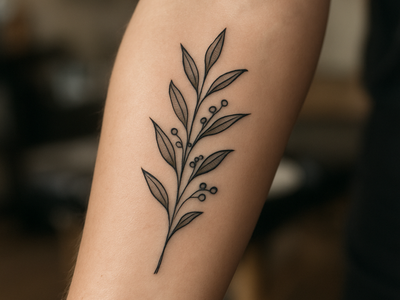
You usually can’t tell during the healing process because everything looks a little swollen and uneven at first. The real tell shows up around the four-to-six week mark, once your skin has fully settled. If a line that should be sharp looks soft or feathered at the edges, and it’s not just normal healing redness, that’s a blowout. Bloodwork of ink you can actually see with your eyes: does the line look like it was drawn with a fine pen, or did someone drag a wet marker across it?
Can Anything Be Done
A skilled artist can sometimes touch up around a blowout to make it less noticeable, usually by adding a thicker line or shading over the blurred area to visually “absorb” it. It’s not a perfect fix. Laser removal can lighten the area, but that comes with its own cost and commitment. Mostly, prevention is the only real solution, which puts a lot of the responsibility back on choosing the right artist for the right placement.
How to Actually Avoid One
- Skip the fine-line micro-tattoo on fingers, wrists, or ankles if you can help it — save the delicate stuff for meatier real estate like the forearm or thigh.
- Ask your artist directly if they have experience tattooing that specific spot. Portfolio pictures of similar placements are a fair thing to request.
- Don’t chase the cheapest quote for detailed line work in a risky spot. This is one of those situations where paying for someone who’s genuinely dialed in on needle depth actually matters.
- Accept that some areas will always soften a bit with time, blowout or not. Fine lines spread slightly as skin ages no matter what. If ultra-crisp permanence matters to you, factor that into your placement choice from the start.
None of this means avoid thin-skin tattoos altogether. Plenty of people have gorgeous finger and wrist pieces that held up fine. It just means going in with realistic expectations, and picking your artist based on where you’re putting the tattoo, not just their style.